Gaming Routers: Beyond the Aesthetic
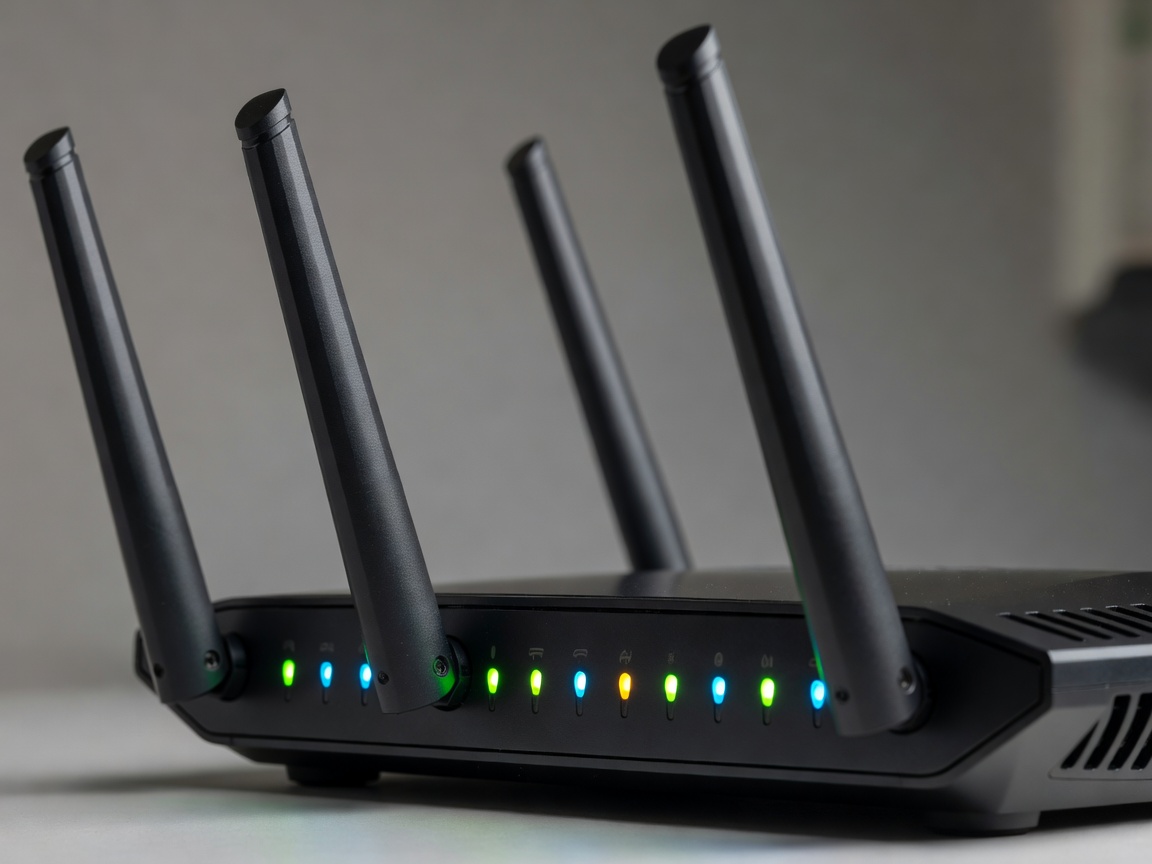
Often characterized by aggressive styling and numerous antennas, true gaming routers distinguish themselves not by sheer bandwidth, but by their ability to manipulate packet prioritization and minimize latency.
The Metric That Matters: Ping
In online gaming, downloading a large file quickly is secondary. The primary concern is "ping"—the time it takes for a packet of data to travel from your console or PC to the game server and back. Measured in milliseconds (ms), lower ping results in a more responsive experience. Standard routers process data packets on a first-in, first-out basis. If a television in the living room begins buffering a 4K movie, the router might momentarily delay your gaming packets, resulting in lag spikes.
Quality of Service (QoS)
The fundamental feature of a gaming router is an advanced Quality of Service (QoS) engine. QoS allows the user—or the router's internal software—to prioritize certain types of traffic over others.
Modern implementations use Adaptive QoS, which deeply inspects packets to determine their origin. It recognizes gaming traffic versus video streaming or bulk downloads, ensuring that the small, time-sensitive packets required for gaming are always moved to the front of the queue. This means a saturated network will not induce jitter into a multiplayer match.
Hardware Acceleration and Ports
To process deep packet inspection and routing rules without introducing processor-based delay, gaming routers require substantial internal hardware. Multi-core CPUs and dedicated RAM are standard.
Furthermore, the physical interfaces are enhanced. High-end models feature dedicated "Gaming Ports"—specific LAN ports on the back of the device that automatically receive top priority on the local network without requiring software configuration. The inclusion of 2.5Gbps or even 10Gbps WAN/LAN ports ensures that fiber-optic internet connections are not bottlenecked before they reach the routing hardware.
Geofencing and Band Steering
Some firmware platforms include geofencing, allowing a player to restrict the geographic radius of matchmaking servers. Connecting to a server 3,000 miles away guarantees high ping due to physical distance; geofencing forces the game to only accept connections to local servers.
While a wired Ethernet connection is always the optimal choice for gaming, environmental restrictions sometimes force a wireless connection. In these scenarios, gaming routers leverage Band Steering, aggressively pushing legacy devices to the 2.4GHz band to keep the faster 5GHz or 6GHz bands clear for gaming hardware, reducing channel utilization and contention.